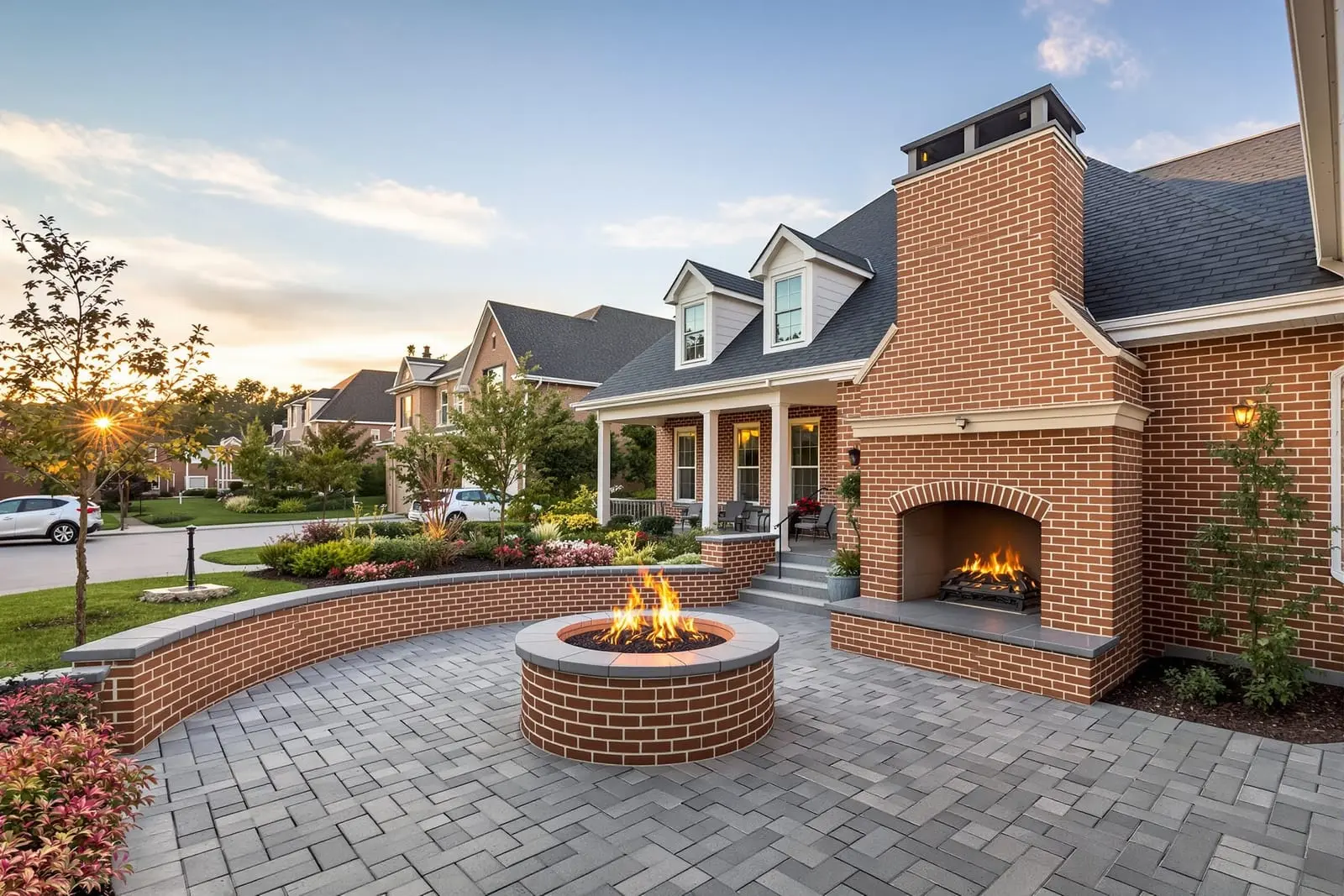
Reliable, professional brick fireplace in Pittsburgh, PA from Vanguard Masonry Pittsburgh. Contact us today for a free on-site estimate.
Vanguard Masonry Pittsburgh provides professional brick fireplace throughout Pittsburgh, PA and the surrounding area. Our licensed, insured crew delivers safe, clean, on-time work with a free estimate before anything begins. Call (412) 784-6404 or request your free quote.
Custom Brick Fireplaces for Pittsburgh Homes
A brick fireplace is more than a heat source, it becomes the visual anchor of a room. At Vanguard Masonry Pittsburgh, we build and restore brick fireplaces that fit the character of Pittsburgh’s housing stock, from early 1900s brick row homes in Bloomfield and Lawrenceville to mid‑century ranches in Penn Hills and newer builds in the North Hills.
When we visit your home, we start by looking at how you actually use the space. Do you want a working wood‑burning fireplace, a gas insert surrounded by brick, or a decorative feature only? That choice determines the firebox requirements, venting, and brick layout. We also look at your existing chimney, the thickness of your walls, and the condition of nearby structural framing so that any new brickwork performs safely, not just looks good.
Our goal is to create a brick fireplace that looks like it belongs in your home, not one that feels dropped in from a catalog. That often means tying the new brick into existing brick walls, picking mortar colors that match original joints, and designing the scale of the mantel and hearth to match ceiling height, window placement, and the proportions of a typical Pittsburgh living room.
How We Build or Rebuild a Brick Fireplace
A successful brick fireplace project in Pittsburgh usually follows a clear sequence of steps.
First is evaluation and planning. We inspect the current fireplace, chimney, and surrounding framing. In many older city homes, we find unlined flues, loose bricks, or previous DIY alterations that are not to current code. We document these issues, take measurements, and discuss how you want to use the fireplace so we can coordinate any needed chimney liner, flue resizing, or gas line work with your HVAC or plumbing contractor.
Second is demolition and structural prep. For a new face or full rebuild, we carefully remove old facing materials, cracked brick, and loose mortar while protecting floors and adjacent finishes. In tight city houses we often build temporary dust walls to keep debris out of the rest of the home. If the opening is being resized, we adjust or install new steel lintels above the firebox to safely carry the brickwork.
Third is setting the layout. We dry‑lay a few courses to show you joint thickness, bond pattern (running bond, stacked, or decorative patterns), and any soldier courses or arches. This is where we confirm mantel height, hearth depth, and TV or artwork placement above the opening so that all elements align before we mortar a single brick.
Fourth is masonry work. We mix mortar suited to the brick and age of the home. In many pre‑World War II Pittsburgh homes we use a softer mix that is kinder to older masonry. Bricks are laid course by course, keeping joints consistent and the face plane flat. We tool the joints to your preference, for example concave for a classic look or flush for a more modern face, then clean the brick with methods that do not damage older material.
Finally, we address finishing details. This includes hearth edge treatments, integrating a wood or stone mantel, fitting a surround for a gas insert if used, and sealing the brick if appropriate for the style and use. We perform a final check of clearances to combustibles and coordinate any required inspection so the fireplace is ready to use.
Brick Styles, Patterns, and Mortar Choices
Brick fireplaces in Pittsburgh vary widely in style, and the materials you choose affect not only appearance but long‑term performance.
For traditional homes in neighborhoods like Squirrel Hill or Highland Park, many homeowners choose a standard modular red brick with a light or buff mortar that echoes original interior arches and exposed chimney stacks. We can replicate classic details such as basketweave hearths or corbeled brick mantels that were common in early 20th‑century construction.
If your home is a newer build in places like Cranberry or Robinson, you might prefer a sleek, linear fireplace with long thin brick or a wirecut brick in a uniform color. Tight joints and flush tooling create a more contemporary look that pairs well with painted drywall and floating shelves.
Mortar color is one of the most overlooked design choices. A light gray joint can soften a dark brick, while a darker mortar can visually compress a fireplace so it feels more compact in a smaller Pittsburgh living room. In restoration work we often custom‑blend mortar sand and pigment to get close to the existing joints so repairs do not stand out as new patches.
Pattern also matters. A simple running bond gives a clean and stable look. Adding a soldier course over the firebox or along the hearth front sets off the opening visually and can mirror exterior brick details on the house. For homeowners wanting something unique, we sometimes use herringbone panels inside the firebox back wall or on the hearth surface, which adds texture while still being practical to maintain.
What Affects the Cost of a Brick Fireplace in Pittsburgh
Project cost for a brick fireplace is driven by more than just square footage of brick. When Vanguard Masonry Pittsburgh prepares an estimate, we look at several local realities that directly affect pricing.
Access is a major factor. In older city homes with tight stairways and no side yard, debris removal and material delivery take longer, which increases labor time. In suburban homes where we can stage materials in a driveway and use direct access, labor is usually more efficient.
The condition of the existing structure also matters. If we find a cracked firebox, failing chimney, or inadequate support above the opening, we must correct those issues so the new brickwork is safe and code compliant. That can include new refractory firebrick inside the firebox, a new smoke shelf, or coordinating with a chimney professional for relining, all of which add to the project cost but protect your home.
Design complexity plays a role. A simple brick face overlay around an existing gas insert with no opening changes is less expensive than a full rebuild with a new arched opening, extended raised hearth, and integrated brick shelving. Special shapes, herringbone panels, or custom corbeled mantels require more layout and labor.
Material choice matters too. Standard modular brick in a common color is more cost effective than specialty handmade or tumbled brick. If you want to closely match a historic brick that is no longer made, we may need to source from multiple suppliers or use a higher grade product, which affects material cost.
Finally, finish coordination can add time. If your project includes tying the brick fireplace into built‑ins, drywall changes, or a new surround, we will coordinate with your carpenter or finish contractor, which often saves rework and cost later.
Common Fireplace Issues We See in Pittsburgh Homes
Because much of Pittsburgh’s housing is 70 to 120 years old, we see recurring fireplace problems that homeowners should be aware of before planning cosmetic upgrades.
Cracked or spalling brick around the firebox opening is common. Freeze‑thaw cycles off the rivers and infiltration from older chimneys allow moisture into the masonry, then winter temperatures cause the faces of bricks to pop off. When we find this, we remove damaged units, inspect the backing masonry, and replace with new brick that matches in size and color as closely as possible.
Many older fireplaces were altered to install gas logs or inserts without fully updating the surrounding masonry. We frequently see oversized openings with undersized lintels or unprotected combustibles too close to the firebox. Before building a new brick face around an insert, we confirm clearances, adjust the opening if needed, and install proper metal support so the new brickwork is structurally sound.
We also encounter smoke staining and draft issues. This can be due to an opening that is too large for the existing flue, missing smoke chambers, or negative pressure from modern tight windows. While we do not redesign flue systems, we work closely with chimney specialists to coordinate the right firebox dimensions and throat transitions so the brickwork complements any draft corrections.
For purely decorative fireplaces that have been sealed off, deteriorated interior firebrick is common. In these cases, we may recommend rebuilding the visible inner surfaces with new firebrick and heat‑resistant mortar, even if you only plan to use candles or electric inserts, so the firebox looks clean and intentional instead of like an abandoned cavity.
Code, Safety, and Climate Considerations in Allegheny County
Brick fireplaces must be built to code and suited to Pittsburgh’s climate. Vanguard Masonry Pittsburgh pays attention to local requirements and how our freeze‑thaw conditions affect design decisions.
Allegheny County follows the Pennsylvania Uniform Construction Code, which references the International Residential Code. Clearances to combustible framing, hearth extension size, lintel support, and required materials inside the firebox are spelled out. When we modify an opening or rebuild a face, we size and locate the brickwork to satisfy those requirements, which is especially important if you sell your home later or your insurance company requests documentation.
The local climate adds specific considerations. Seasonal humidity changes and winter temperatures put stress on masonry. We select compatible brick and mortar so joints flex with the structure instead of cracking apart. In exterior chimneys tied to interior fireplaces, we often see water infiltration that eventually shows up as staining or loose brick at the fireplace face. Part of our work may include repointing or sealing trouble areas on the exterior so the new interior brickwork is not compromised from behind.
If you are converting from wood burning to a gas insert surrounded by brick, venting must be coordinated with local mechanical codes and manufacturer instructions. We confirm the framing and brick dimensions so the insert fits correctly, maintains proper air spaces, and leaves access for future servicing.
What to Expect When You Hire Vanguard Masonry Pittsburgh
When you contact Vanguard Masonry Pittsburgh about a brick fireplace, we start with a conversation about how you live. We ask about heating goals, aesthetics, and budget, then schedule an on‑site visit to see the fireplace and chimney in person. Photos are helpful, but in older Pittsburgh homes there are often hidden conditions that only a site visit reveals.
After the visit, we provide a written proposal that outlines the scope of work, materials, anticipated challenges, and a realistic schedule. If there are optional upgrades, such as a more intricate brick pattern or expanded hearth, we show those as separate line items so you can decide what fits your budget.
During the project, we protect flooring and nearby finishes with coverings and temporary barriers. In tight city houses, we plan material staging and debris removal so neighbors and shared entryways are respected. Our crews keep consistent work hours and clean up at the end of each day so your home remains as functional as possible while the fireplace is under construction.
Once the brickwork is complete, we review the finished fireplace with you, explain any curing time before full use, and discuss basic maintenance like gentle cleaning methods and signs of moisture or movement to watch for over time. Our aim is that your new brick fireplace feels like it has always belonged in your Pittsburgh home and continues to perform well through many heating seasons.
“
Professional brick fireplaces, done right the first time, quality materials, honest pricing, and results that last.