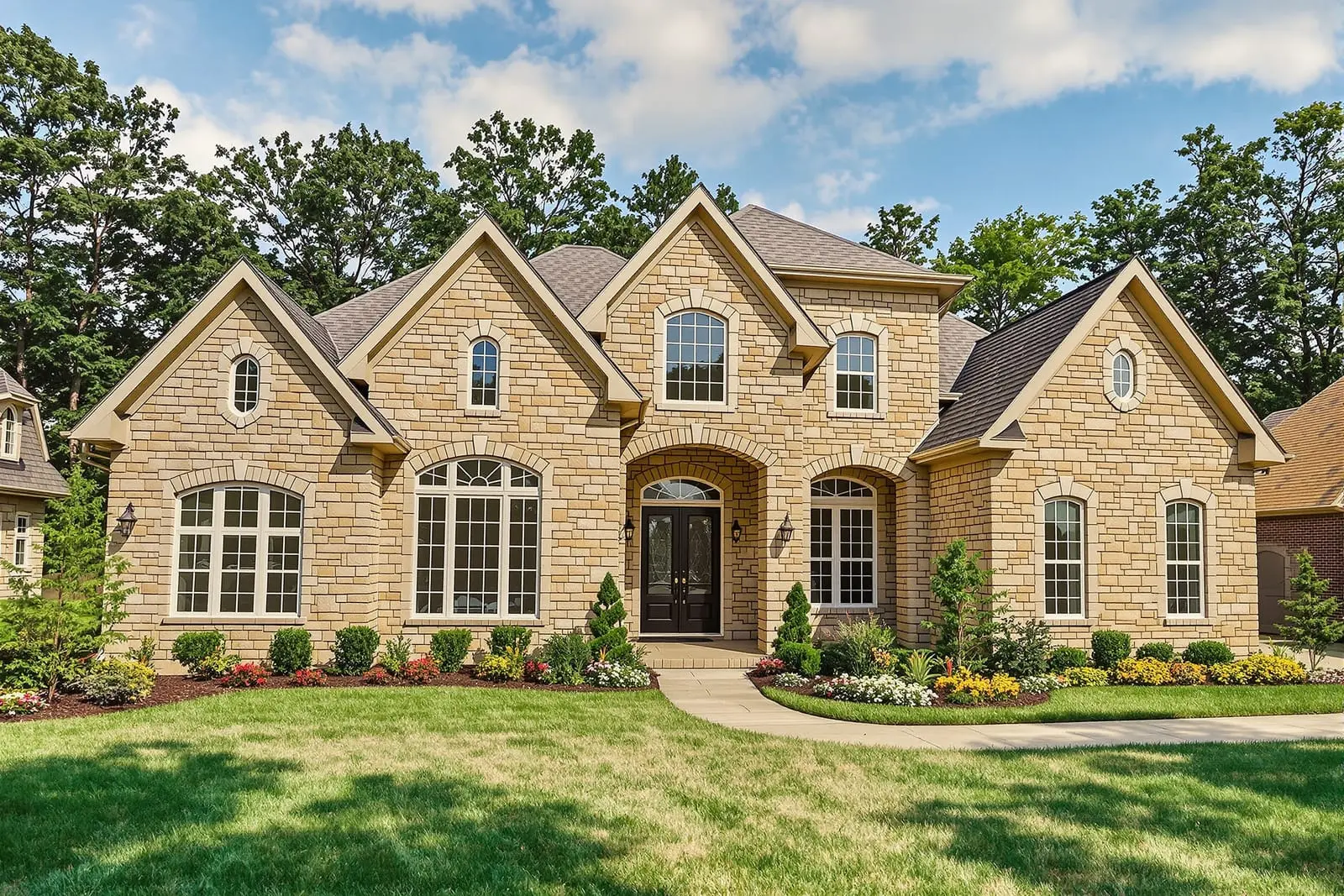
Our stone masonry services in Pittsburgh, PA bring timeless character and strength to your property. We install natural and manufactured stone for walls, facades, and outdoor features. Every stone is carefully selected and set for a stable, long lasting structure that looks great from day one.
Vanguard Masonry Pittsburgh provides professional stone masonry throughout Pittsburgh, PA and the surrounding area. Our licensed, insured crew delivers safe, clean, on-time work with a free estimate before anything begins. Call (412) 784-6404 or request your free quote.
Stone Masonry Services in Pittsburgh That Fit Your Home and Neighborhood
Stone masonry in Pittsburgh is a little different than in other cities. We have steep hills, old brick homes from the early 1900s, post‑war concrete block houses, and a lot of clay soils that move with our freeze‑thaw cycles. Vanguard Masonry Pittsburgh plans stone work with all of that in mind so your walls, steps, and veneers hold up to local weather instead of cracking apart in a few seasons.
When we look at a project, we start with how your property is built and how water moves across it. For a Mt. Washington hillside, we think about drainage behind stone retaining walls so pressure from wet soil does not blow the wall out. In flatter neighborhoods like Greenfield or parts of Monroeville, we pay more attention to downspout runoff and how it hits walks, stoops, and patios. We do not just look at the stone; we look at the structure that will support it and the ground under it.
Vanguard Masonry Pittsburgh works with both natural stone and manufactured stone veneer. Natural stone (like sandstone, limestone, and fieldstone common around Western PA) is heavier and more irregular, which gives a classic Pittsburgh look but also needs a solid foundation and more skilled shaping. Manufactured veneer is lighter, faster to install, and often chosen for updating a newer house with a stone front. We explain the tradeoffs in cost, weight, and maintenance so you are choosing what fits your home instead of chasing a trend.
Every stone masonry job we take on starts with a site visit, measurements, and photos. We check for existing cracks, settling, or loose mortar so you are not putting new stone over a failing base. If a front stoop is pulling away from the house or a retaining wall is leaning, we talk through whether it can be repaired or needs partial rebuild, along with rough budgeting before anyone commits to detailed plans.
How We Actually Build Stone Masonry: Step by Step
Stone masonry is not just stacking rocks and filling joints. Vanguard Masonry Pittsburgh follows a clear sequence so the work looks good and does not fail in a couple of winters.
1. Base and foundation preparation
For patios, walks, and small garden walls, we excavate to the proper depth, usually at least 6 to 8 inches below finished grade for walkways and more for driveways or structural walls. We install and compact a crushed limestone base in layers using a plate compactor, not just a hand tamper, which is important in our freeze‑thaw climate. For larger retaining walls or structural stonework, we often pour a concrete footing below frost depth and set rebar where needed.
2. Drainage and waterproofing
On retaining walls, we install perforated drain pipe behind the wall, wrapped in fabric and surrounded by clean gravel. This relieves water pressure that commonly causes bulging walls in neighborhoods built on slopes like Beechview or Brookline. For stone veneer on foundations or basement walls, we apply the right waterproofing or damp‑proofing first, then a metal lath and scratch coat to give the stone something solid to grab.
3. Stone selection and layout
We bring sample stones or meet you at a supplier so you can see actual colors and textures. For natural stone, we sort pieces by size and thickness on site, then do a dry layout on the ground for key areas like front entries or accent walls. This lets us balance colors and avoid repeating patterns that look fake. On veneers, we mix boxes from different pallets so you do not end up with color banding.
4. Setting the stone
For full‑bed stone, we butter each stone with mortar, bed it firmly, and tap it into place so the stone bears on both the mortar and the backing. Joints are kept consistent for the style you want, whether tight joints with raked lines or wider joints that show more mortar. For veneer, we apply mortar to both the wall and the back of each stone (a “double butter”), then press and slightly wiggle the piece to lock it in. Corners are done with special corner units or carefully shaped natural pieces so the wall looks like real thickness, not a flat face.
5. Tooling and cleanup
Once mortar firms up, we tool the joints to the requested finish, which can change the look a lot. A concave joint sheds water well, while a slightly brushed joint can make new work match older stone on a 1920s brick house. We clean the stone with brushes and low‑pressure water, not harsh acids that can burn certain stones. Final cleanup includes grading around the work so water drains away properly.
Common Local Issues With Stone Masonry and How We Prevent Them
Pittsburgh’s climate is hard on stone masonry. The most common problems we see are tied to water, salt, and movement in old foundations.
Frost damage and spalling
Rain and snow get into tiny cracks, then freeze and expand. Over time this pops faces off stones or blows out mortar joints, especially on steps and walkways that get salted. Vanguard Masonry Pittsburgh minimizes this by using mixes suited to exterior work, keeping proper joint profiles, and pitching surfaces slightly so water runs off instead of pooling. On most horizontal stone we recommend a slight slope away from the house, often 1/4 inch per foot.
Efflorescence and white staining
White powdery stains on stone and mortar are usually salts leaching to the surface. Around Pittsburgh this is common on basement walkouts, retaining walls cut into hillsides, and new veneer over damp foundations. We handle this by addressing moisture first: better grading, drains, or breathable sealers where they make sense. Cleaning is done with appropriate cleaners tested on a small area so the stone is not etched.
Loose steps and shifting walls
On older homes in neighborhoods like Lawrenceville, Bloomfield, or Dormont, we see sandstone steps that have shifted or settled. Often the problem is a poor base or washout from decades of runoff. Instead of just packing more mortar into visible gaps, we lift or reset the stone on a proper bed, sometimes adding concrete pads or piers, then tuckpoint the joints. For leaning stone retaining walls, we check how far they have moved, if there is bulging, and if drainage is present at all. In some cases we can rebuild in sections and reuse much of the original stone so the wall keeps its historic character.
Mismatch repairs
A lot of past repairs around town were done with the wrong mortar color or a completely different stone, which makes a patch stand out. Vanguard Masonry Pittsburgh takes time to match mortar color, texture, and joint style so your new work does not scream “patch job.” For natural stone, we can often source local or regional stone that is close in color to what you have, then blend it in by mixing old and new pieces across the repaired area instead of grouping all the new stone in one spot.
Design Options, Costs, and What Affects Your Budget
Stone masonry is one of those trades where two projects that look similar in photos can have very different costs. Vanguard Masonry Pittsburgh walks you through what affects the price so you can adjust the design before you overspend.
Material choices
Natural stone typically costs more in both material and labor. Irregular fieldstone or split‑face stone takes more time to fit, especially around doors, windows, and railings. Manufactured stone veneer is lighter and faster to cut, so total installed cost is often lower for large wall areas. If you want the look of full stone on the whole front of a house but need to keep the budget reasonable, a common approach is full stone or high‑quality veneer on the lower half and a simpler finish above.
Site access and layout
On narrow city lots in places like South Side or Polish Hill, just getting material to the work area can add labor, especially if everything has to move through a side gate or up exterior stairs. Curved walls, custom radius steps, and complex patterns like herringbone or mixed‑size flagstone patios all add layout and cutting time. Straight runs, repeated risers, and simple patterns cut costs without sacrificing strength.
Base and structure work
In many older Pittsburgh homes, the biggest cost surprise is not the stone itself but what is under it. A crumbling concrete stoop, a failed block retaining wall, or a clay tile drain that has collapsed can require additional demolition and rebuild. We include these possibilities in our estimates so you are not blindsided. Sometimes we phase work, starting with structural fixes in year one and adding decorative stone features later.
Finishes and details
Edge treatments, custom caps, and integrated lighting all affect cost. For example, solid stone treads on steps are more expensive than a concrete base with stone risers and a separate cap, but they are very durable and handle winter salting better. On retaining walls, a properly sized stone or cast cap not only looks finished, it protects the face of the wall from direct water entry at the top, which saves money on repairs later.
What to Expect When You Hire Vanguard Masonry Pittsburgh
We try to keep the process straightforward so you always know what is happening and why.
Initial visit and proposal
We visit your property, listen to what you want, and look for hidden issues such as drainage problems, failing concrete, or structural movement. You will get a written proposal that lays out scope, materials, important prep work, and an estimated timeline. If there are unknowns, such as what we will find behind a failing veneer, we explain best and worst cases up front.
Scheduling and preparation
Before we start, we discuss access, parking, and where materials and tools will be staged, which matters in tight Pittsburgh streets and shared driveways. If permits are required for larger retaining walls or structural changes, we help with that process or coordinate with your engineer when needed.
During the work
We keep the site as orderly as possible, especially on front walks and steps that you still need to use. We protect nearby siding, railings, and landscaping from mortar splatter and stone chips. If we uncover a problem that changes the plan, such as a deteriorated foundation or unexpected voids, we pause to show you what we found, explain options, and adjust only with your approval.
Finishing and aftercare
At the end, we rinse down surfaces, sweep up, and haul away debris so you are not left with a pile of broken stone or old concrete. We give basic care instructions that fit Pittsburgh conditions, such as what kind of ice melt to avoid on new stone steps, when it is safe to power wash, and when a breathable sealer makes sense. Vanguard Masonry Pittsburgh stands behind our stone masonry work, and we are available afterward if you have questions about maintenance or future projects that tie into what we installed.
“
Professional stone masonry, done right the first time, quality materials, honest pricing, and results that last.