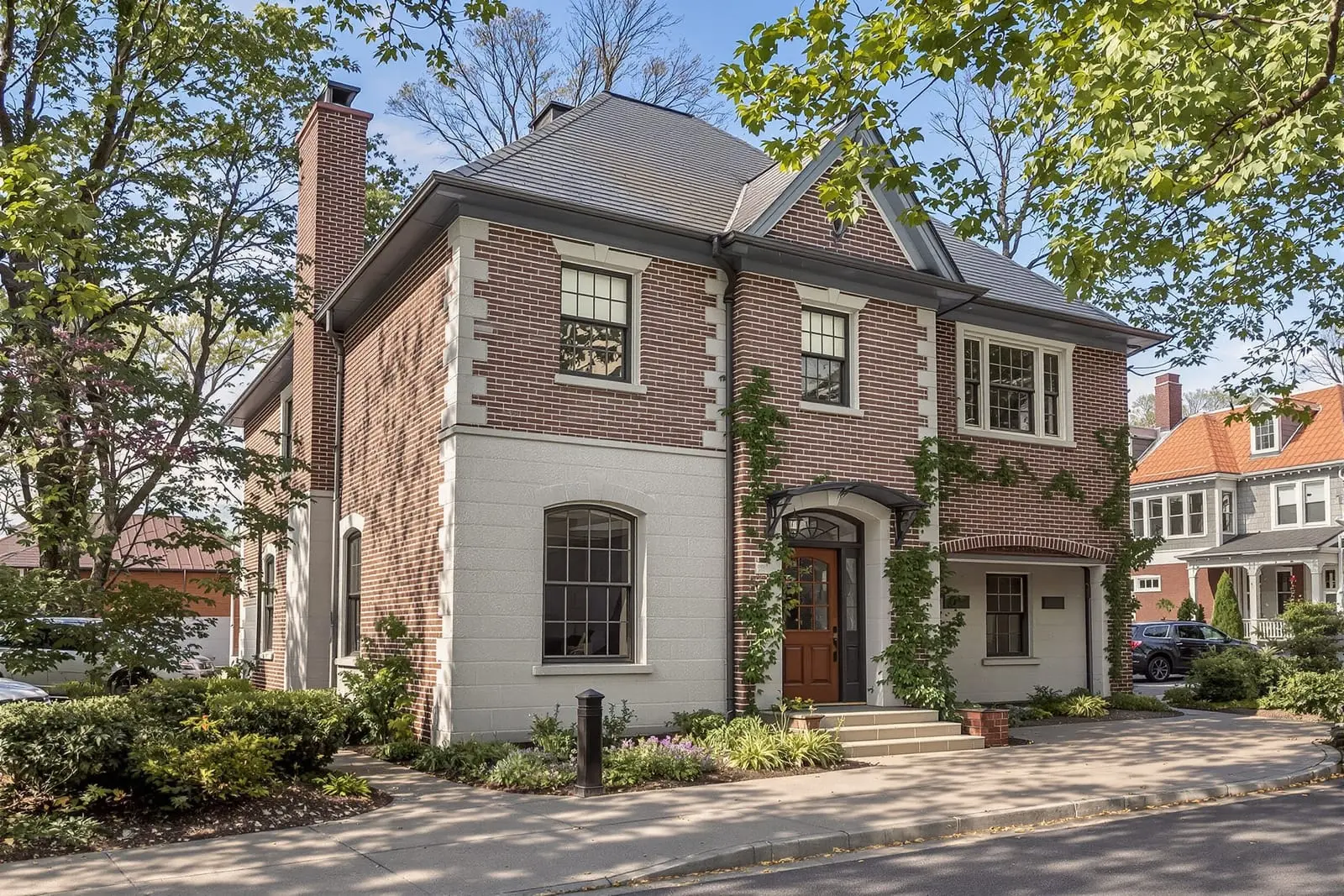
Our commercial tuckpointing and masonry repair services in Pittsburgh, PA keep large brick and stone buildings safe and attractive. We address loose units, cracked joints, and water entry on facades and parapets. Work is planned to minimize disruption while extending the service life of your structure.
Vanguard Masonry Pittsburgh provides professional commercial tuckpointing throughout Pittsburgh, PA and the surrounding area. Our licensed, insured crew delivers safe, clean, on-time work with a free estimate before anything begins. Call (412) 784-6404 or request your free quote.
Commercial Tuckpointing That Protects Your Building Investment
Brick and block buildings in Pittsburgh work hard. Freeze-thaw cycles, road salt, and constant moisture off the rivers all wear down mortar joints faster than most owners expect. Vanguard Masonry Pittsburgh focuses on commercial tuckpointing that restores the structural integrity and appearance of your walls while keeping your building open and safe.
On a commercial property, failing mortar is more than a cosmetic issue. Crumbling joints let water travel behind brick, corrode steel lintels, rot sheathing, and contribute to interior leaks and mold. We start by walking the property with you, noting active leaks, spalling brick, open head joints, efflorescence, and prior patchwork. From there, we prioritize areas that are causing damage now, then plan phased work for the rest so budgets and operations are respected.
Our team is used to working on occupied buildings: offices, schools, churches, retail strips, factories, and mixed use properties. We schedule work to minimize impact on tenants and customers, control dust at entry points, and coordinate with your facility or property manager so you are never surprised by noise, access changes, or staging needs.
Our Commercial Tuckpointing Process, Step by Step
Vanguard Masonry Pittsburgh follows a consistent, field-tested process so you know exactly what will happen on your building.
1. Inspection and testing
We examine accessible elevations and, when appropriate, perform test cuts. We look at mortar hardness, depth of existing joints, brick condition, and evidence of structural movement. Mortar samples can be compared for color and sand profile so new joints blend with original work.
2. Setting access and protection
For commercial tuckpointing we commonly use frame scaffolding, mast climbers, or aerial lifts, depending on building height and site access. We install debris netting near sidewalks, protect windows with poly, and set up clear pedestrian and vehicle routes. On busy Pittsburgh streets we coordinate permits and sidewalk protection with the city so your frontage stays safe and compliant.
3. Mortar removal
We mechanically remove deteriorated mortar to a depth of about 2 to 2.5 times the joint width, or until sound material is reached. Technicians use tuckpointing grinders with vacuum attachments where possible, combined with hand chisels around corners and softer brick. Controlling heat and vibration is crucial on older Pittsburgh brick that can be more brittle.
4. Cleaning the joints
Once cut out, joints are brushed and blown clean of dust. For active leak areas we may lightly rinse joints to remove salt and contaminants, then allow proper drying time. Clean joints give new mortar a strong bond, which is essential in our freeze-thaw climate.
5. Installing matched mortar
We mix mortar on site to match the original in color, texture, and strength. On historic or pre-war buildings that often means lime-rich Type N or custom blends. On newer commercial facades such as CMU and brick veneer on steel framing, we typically use Type N or S as appropriate. Mortar is packed firmly into the joint in multiple passes, then tooled to match existing joint profiles like concave, weathered, or flush.
6. Final tooling, brushing, and washdown
After initial set, joints are brushed to remove crumbs and blend edges. Where staining is a concern, especially on lighter brick or cast stone, we may do a gentle washdown by hand instead of a blanket pressure wash, to avoid forcing water into the wall.
7. Quality check and punch list
We walk the elevations again, checking for voids, hairline cracks, or hollow spots. Any concerns are addressed before access equipment is removed, so you are not left with lingering problem areas.
Masonry Repair for Commercial Buildings in Pittsburgh
Commercial tuckpointing often goes hand in hand with other masonry repairs. Vanguard Masonry Pittsburgh evaluates the whole wall assembly so you are not treating a symptom while missing the root cause.
Common commercial masonry repairs we perform include:
• Brick and block replacement: Spalled, cracked, or displaced units are carefully removed, and replacements are toothed in so patterns remain consistent. For older Pittsburgh buildings we source salvaged or compatible brick so repairs do not stand out from the street.
• Shelf angle and lintel repairs: When you see horizontal cracking above windows or long rust stains, steel components may be expanding and lifting the masonry. We can expose, clean, or replace steel, add flashing, and then rebuild the masonry skin so water is steered away from critical components.
• Parapet and coping repair: Parapets at rooflines are frequent sources of leaks. We rebuild loose sections, install proper cap flashing or stone copings, and ensure weep paths exist so trapped moisture can escape instead of pushing your brick outward.
• CMU wall repairs: Many industrial and warehouse structures around Pittsburgh use exposed CMU. We repair cracked blocks, regrout cells where structural fill is missing, and apply breathable sealers where appropriate.
Each repair plan is documented in a clear scope so you can share it with stakeholders, boards, or corporate offices. We focus on repairs that extend the remaining service life of your walls while respecting existing architecture.
What Affects Cost for Commercial Tuckpointing in Pittsburgh
Commercial tuckpointing pricing is driven by a mix of access, wall condition, and project logistics, not just square footage. Vanguard Masonry Pittsburgh explains these factors in plain language so you can budget accurately.
Key cost drivers include:
• Access and height: A single story retail strip in the South Hills with easy lift access will cost less per square foot than a multi story downtown facade requiring full scaffolding, netting, and sidewalk closures.
• Surface area and joint depth: Large open walls allow efficient production, while facades with many windows, decorative bands, or recessed areas require more hand work. Severely deteriorated joints, which must be cut deeper to reach sound mortar, also increase labor.
• Mortar type and color matching: Standard gray mortar is straightforward. Custom color matching, blended sands, and historic lime mortars involve more time, testing, and materials but yield a better visual result, especially on storefronts and institutional buildings.
• Extent of related repairs: If tuckpointing is combined with brick replacement, lintel work, or parapet rebuilding, the total investment rises, but access costs are shared across multiple repairs. This is often more economical than staging the building multiple times.
• Phasing and schedule: Night or weekend work to keep a business fully open, or tight completion windows tied to tenant move ins, can add to labor cost. On the other hand, flexible schedules that let us sequence work efficiently can reduce the unit price.
During estimating, we typically perform a quantity takeoff from plans and site measurements, then assign pricing based on actual access needs. For larger properties, we can break the building into logical zones, each with a cost, so you can phase work across budget cycles without losing track of the full picture.
Why Local Experience Matters for Commercial Masonry Repair
Pittsburgh’s climate and building stock create specific conditions that a commercial masonry contractor must understand. Vanguard Masonry Pittsburgh is built around that local knowledge.
Our region gets repeated freeze-thaw swings and wind driven rain. Buildings near heavily salted roads, parking decks, and bridges experience accelerated mortar decay and brick spalling. We account for prevailing wind directions, sun exposure, and water paths when deciding where to prioritize tuckpointing or recommend additional flashing or sealers.
Pittsburgh also has a wide mix of construction eras. A pre-war brick warehouse in the Strip District behaves very differently than a 1990s office park in Robinson. Older load-bearing brick walls do not tolerate overly hard modern mortars. If a contractor fills soft joints with high strength mortar, the surrounding brick can crack and fail. We adjust mortar type to suit the original construction so the wall continues to move and breathe correctly.
Local codes and coordination also matter. Working downtown or along busy corridors often requires sidewalk protection, traffic control plans, and strict staging windows. We are familiar with local permitting processes and typical expectations on institutional campuses, healthcare facilities, and schools. That experience reduces delays, which protects your schedule and relationships with your tenants.
Because we live and work here, we know how quickly conditions can change. We keep a close eye on extended freeze periods or heavy rain forecasts and adjust mixing, protection, and cure times so new tuckpointing and repairs perform as intended.
What To Expect When You Hire Vanguard Masonry Pittsburgh
From the first walk through to the final punch list, Vanguard Masonry Pittsburgh aims to make commercial tuckpointing and masonry repair straightforward and predictable for owners, managers, and facility teams.
1. Initial consultation
We meet on site, discuss your goals, problem areas, and operational constraints, then review the building elevations. We may climb or use lifts to see trouble spots first hand rather than guessing from the ground.
2. Written scope and clear options
You receive a written scope that breaks work into priorities, such as critical leak areas, safety and falling masonry concerns, and appearance driven repairs. When budgets are tight, we provide options for staging work over several seasons while still addressing urgent issues.
3. Tenant and operations coordination
Before mobilizing, we provide notice language you can send to tenants, and we review loading dock access, deliveries, school schedules, or service entrances so business disruption is minimized.
4. Professional, safety focused crews
Our crews are trained in scaffold and lift safety, fall protection, and silica dust control. We maintain clean work areas, manage noise as much as practical, and keep you updated on progress so you can answer questions from tenants and stakeholders.
5. Closeout and maintenance planning
At completion, we walk the site with you, review completed elevations, and discuss any future maintenance needs. Many owners choose to schedule periodic inspections every few years to catch developing issues early, which is far less costly than emergency structural repairs.
If you manage or own a commercial building in the Pittsburgh area and have concerns about aging mortar joints, water intrusion, or loose masonry, Vanguard Masonry Pittsburgh can assess the situation and propose a targeted plan that protects your asset and keeps your property looking professional.
“
Professional commercial tuckpointing and masonry repair, done right the first time, quality materials, honest pricing, and results that last.
Vanguard Masonry Pittsburgh
Commercial Tuckpointing and Masonry Repair Across Our Service Area