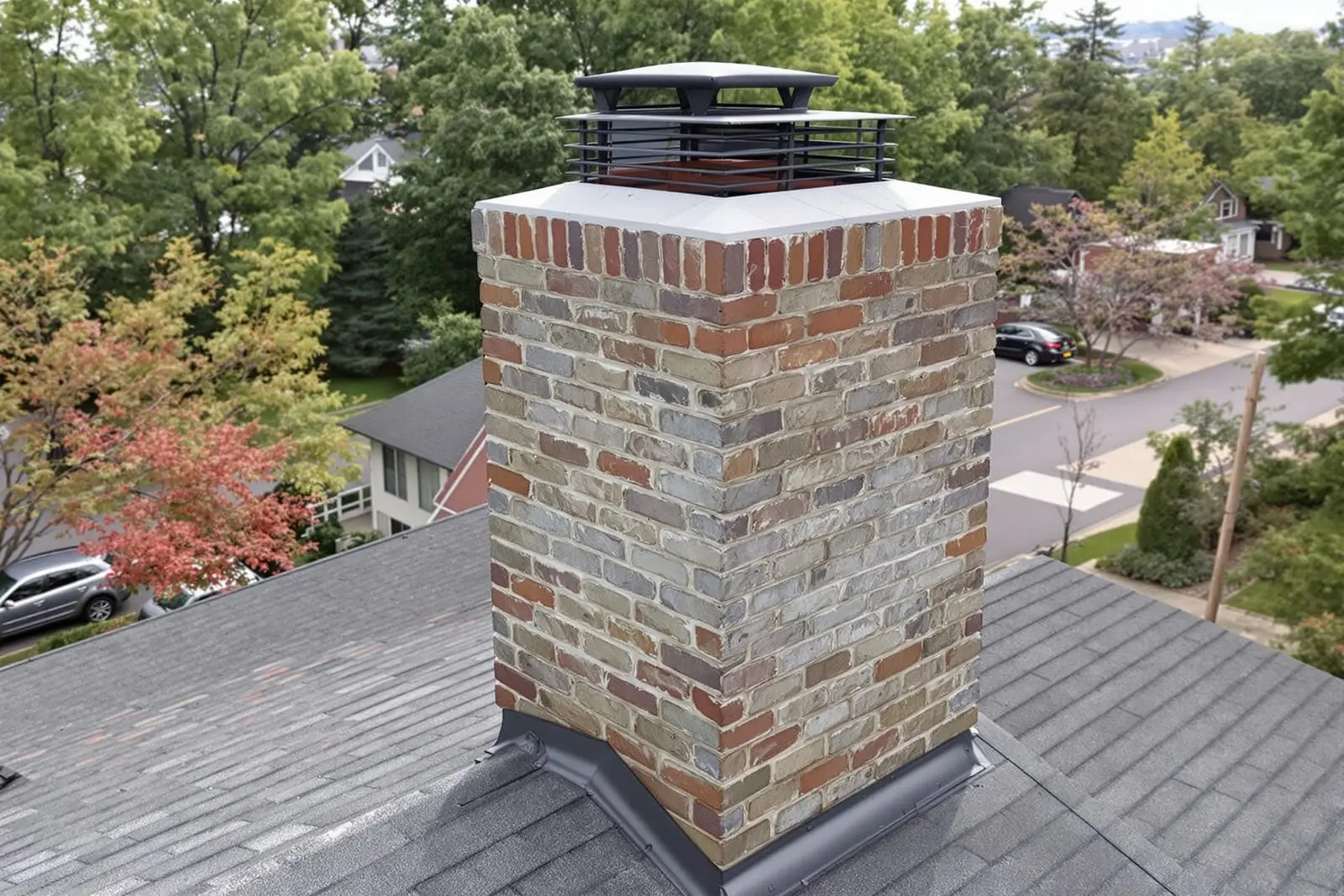
We provide complete chimney masonry repair in Pittsburgh, PA to keep your home safe and dry. Our masons replace damaged bricks, rebuild crowns, repoint joints, and correct structural issues. By addressing chimney problems early, we help prevent water leaks and costly interior damage.
Vanguard Masonry Pittsburgh provides professional chimney repair throughout Pittsburgh, PA and the surrounding area. Our licensed, insured crew delivers safe, clean, on-time work with a free estimate before anything begins. Call (412) 784-6404 or request your free quote.
Chimney Repair for Pittsburgh Homes
In Pittsburgh, your chimney takes a beating from wet snow, freeze-thaw cycles, and long heating seasons. Vanguard Masonry Pittsburgh focuses on chimney repair that is tailored to these local conditions, not just generic patch work. When we look at a chimney, we start with how the structure actually behaves in our climate: how water is getting in, how the brick and mortar are moving, and how the chimney is tied into the roof and interior fireplaces or boilers.
Most of our chimney repair calls in the Pittsburgh area begin after a leak shows up around the chimney, bricks start flaking, or pieces of mortar fall into the firebox. Our first step is always a roof-level inspection, not just a ground glance. We check the crown, the top few courses of brick, the mortar joints, the chimney cap or flue cover, and the flashing where the chimney meets the shingles. That full picture lets us tell you if you need a focused masonry repair, a full rebuild of the upper section, or just targeted tuckpointing.
Vanguard Masonry Pittsburgh explains the condition in plain language. For example, if the top three or four brick courses have lost their faces from years of freeze-thaw, we will recommend removing and rebuilding that section instead of trying to smear on a surface coating that will fail in a couple of winters. We also talk about how long you plan to stay in the house, what fuel you burn, and whether the chimney still serves a working fireplace, a boiler, or only a decorative use. Those details shape the repair plan and your budget.
How Vanguard Masonry Pittsburgh Repairs Chimney Brick and Mortar
Chimney masonry repair usually starts with stabilizing loose areas before anything else. On a typical Pittsburgh brick chimney, we first remove any dangerously loose bricks and scrape out crumbling mortar joints using hand tools and small grinders with dust control. We never just smear new mortar on top of rotten joints, because that traps moisture and causes the face of the brick to pop off in the next freeze.
Once the bad joints are cleaned to a proper depth, we wash out dust and debris and allow the masonry to surface dry. Then we pack in fresh mortar that is matched to the original chimney in strength and color. Many older neighborhoods in Pittsburgh, like Squirrel Hill, Bloomfield, and Mount Washington, have softer brick that cannot handle today’s very hard mortars. Vanguard Masonry Pittsburgh uses mixes that are compatible with these older bricks, so the mortar takes the stress instead of the brick cracking.
For bricks that have spalled, cracked, or shifted, we remove them individually or in small groups, clean the surrounding cavity, and install new units bedded in fresh mortar. We try to source brick that matches your existing chimney as closely as possible in size and texture, often from local suppliers that stock common Pittsburgh brick lines. When an exact match does not exist, we adjust the layout and mortar joint profile to blend in from street view instead of drawing the eye to the repair.
If the upper part of the chimney is unsalvageable, we may recommend a partial rebuild from the roofline up. In that case, we carefully support the remaining sections, dismantle the failing courses by hand, and rebuild using new brick or block with an outer brick veneer, depending on what you prefer and what is structurally appropriate. We always maintain or improve the interior flue dimensions so your fireplace or appliance continues to draft safely.
Chimney Crowns, Caps, and Flashing in Our Climate
In Pittsburgh, many chimney problems start at the top. A lot of homes still have old sand-and-mortar chimney crowns that have hairline cracks. Water seeps in, freezes, and eventually breaks off chunks of the crown and the top bricks. Vanguard Masonry Pittsburgh often replaces these with poured concrete crowns that are thicker in the middle, slope away from the flue, and overhang the brick with a drip edge. This detail keeps water from running straight down the chimney walls.
We also pay close attention to how the crown ties into the metal chimney cap or flue cover. A good cap keeps rain, snow, and animals out, but it must also allow smoke and moisture to escape. For wood-burning fireplaces, we often install stainless steel caps that bolt to the flue tile. For older chimneys that have multiple flues in one stack, such as a fireplace and a boiler, we size and position each cap so exhaust from one flue does not blow into another.
Flashing is another common leak source. The metal that should step up the roof and turn up the chimney is often buried in caulk or roofing cement. In our repairs, we pull back shingles around the chimney, inspect the step flashing and counterflashing, and replace any rusted or improperly lapped pieces. We set new flashing into saw-cut grooves in the brick and embed it with sealant rated for masonry, not generic silicone. This approach lets the chimney and roof move with temperature changes without cracking the seal in the first winter.
Finally, because Pittsburgh gets significant freeze-thaw cycles, we may recommend a breathable water repellent on exposed chimney faces after repair. Vanguard Masonry Pittsburgh uses penetrating sealers that allow vapor to escape but reduce liquid water absorption. We only apply these after the masonry has fully cured, and we explain where it helps and where it is unnecessary so you are not paying for coatings that do nothing.
What Drives Chimney Repair Cost in Pittsburgh
Chimney repair pricing varies a lot, and we try to be transparent about why. The first big factor is access. A one-story ranch in Monroeville with a wide driveway is straightforward, while a three-story narrow lot in Lawrenceville may require roof brackets, extra safety gear, and more labor hours. If a lift or scaffolding is needed, we include that cost in your proposal and explain why.
The second factor is how deep the damage goes. Light tuckpointing, where only the outer portion of the joints has failed, is far less expensive than a rebuild of the top few feet or the entire stack above the roofline. When bricks are loose on multiple sides or the chimney is leaning, we have to assume more dismantling, more new material, and more time. Vanguard Masonry Pittsburgh photographs each side of your chimney and marks up the photos so you can see exactly what we are talking about.
Material choices also affect cost. Matching historic brick, using custom-colored mortar, or rebuilding with decorative patterns will price differently than a basic structural repair. The same is true for crowns. A properly formed and reinforced concrete crown costs more than a quick mortar skim coat, but it usually saves you from repeating the repair a few winters later.
Finally, coordination with other trades can matter. If your chimney serves a gas boiler or water heater, we sometimes work with your HVAC contractor to make sure venting remains correct after repair. If you plan to add a chimney liner, we may adjust the repair sequence so the liner and masonry work do not fight each other. Vanguard Masonry Pittsburgh walks you through these options so you can decide whether to bundle work now or phase it over several seasons.
What Pittsburgh Homeowners Should Check Before Hiring
Before you hire anyone for chimney repair, there are a few local-specific questions to ask. First, confirm they are actually inspecting from roof level or higher, not just from the yard with binoculars. With our steep neighborhoods like Beechview and Mount Washington, ground views can easily hide a cracked crown or recessed joints on the high side of the chimney. Vanguard Masonry Pittsburgh always includes roof access in our assessments when it is safe to do so.
Second, ask how they choose mortar and brick for your home’s age. A 1920s brick rowhouse in Polish Hill behaves differently than a 1990s suburban home in Cranberry. Using the wrong mortar can shorten the life of your chimney by forcing the brick to absorb movement and moisture. We take small samples and compare them, then choose mixes that keep the masonry system balanced instead of just as hard as possible.
Third, look for a clear scope of work in writing that distinguishes between structural chimney repair and cosmetic touch up. Your proposal from Vanguard Masonry Pittsburgh will call out which areas get full joint removal and repointing, which bricks are being replaced, whether the crown is being rebuilt or just patched, and what is being done with flashing and caps. This helps you compare apples to apples with other quotes.
Finally, think about long-term maintenance. Ask what you will need to watch for after the repair is done. We explain how to spot early signs of trouble, like small cracks in new mortar, staining on the interior walls near the chimney, or rust on the damper or firebox. Our goal is for you to understand your chimney well enough that you call us for small corrections before they ever turn into major rebuilds.
“
Professional chimney masonry repair, done right the first time, quality materials, honest pricing, and results that last.