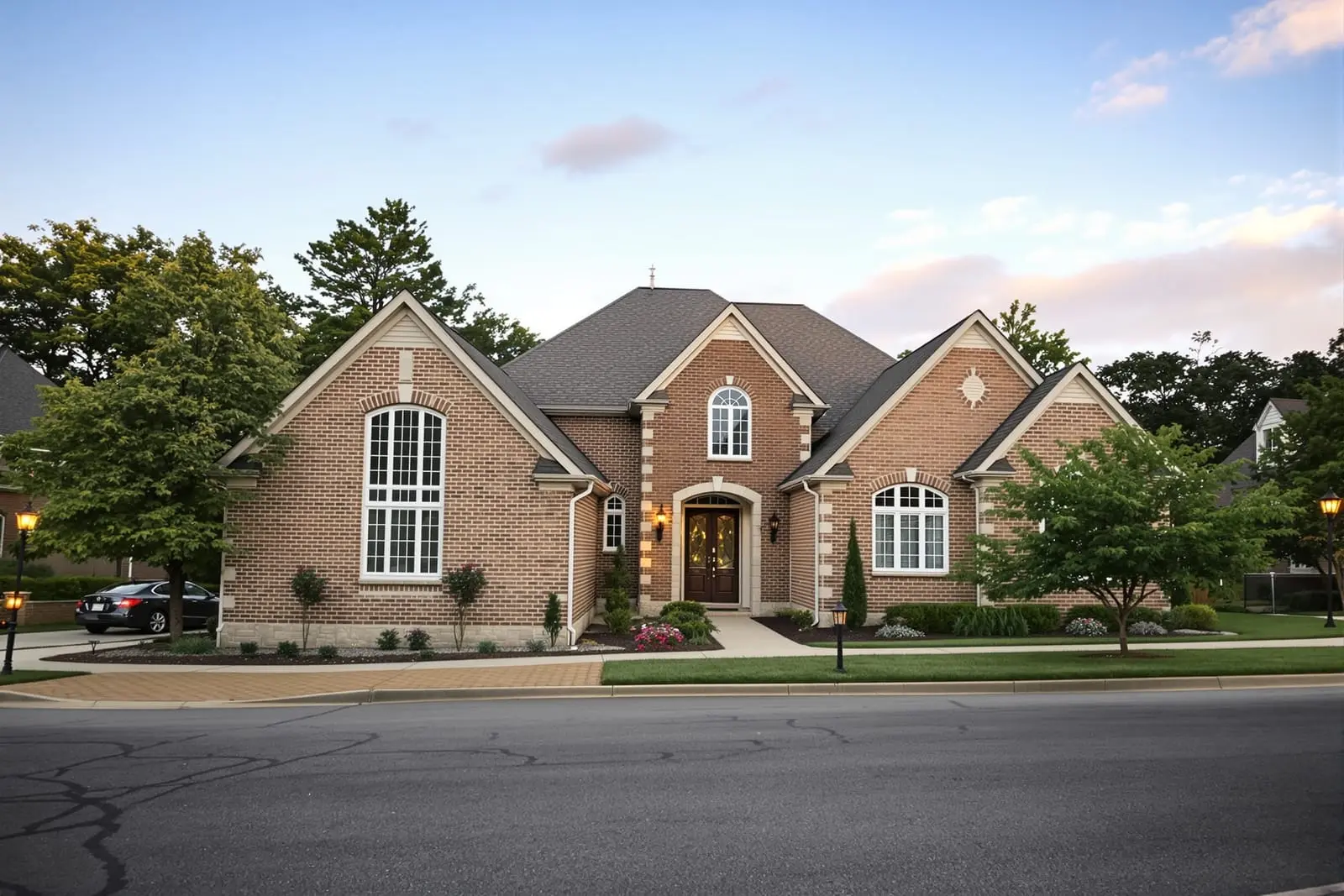
We provide precise brick veneer installation in Pittsburgh, PA to give your home the appearance of full brick at a lower cost. Our team installs veneers over existing surfaces or new construction with proper moisture barriers and flashing. The result is a durable, attractive brick facing that boosts curb appeal.
Vanguard Masonry Pittsburgh provides professional brick veneer installation throughout Pittsburgh, PA and the surrounding area. Our licensed, insured crew delivers safe, clean, on-time work with a free estimate before anything begins. Call (412) 784-6404 or request your free quote.
Brick Veneer Installation in Pittsburgh, Done the Right Way
Brick veneer gives Pittsburgh homes the look of full brick without the structural weight or cost. At Vanguard Masonry Pittsburgh, we focus on brick veneer installation that is built to handle our freeze-thaw cycles, steep hillsides, and older housing stock.
Most of our veneer projects are on wood-framed houses or additions that need an exterior upgrade, as well as basements, chimneys, and interior feature walls. We start with a site walk, checking your existing siding, sheathing, foundation ledge, and drainage. In many Pittsburgh neighborhoods, like Lawrenceville, Bloomfield, and Mt. Washington, homes were never framed with brick veneer in mind, so we pay close attention to how to support the new materials and keep water out.
Whether you want to match an older brick home, modernize a stucco or vinyl exterior, or add a brick accent wall inside, we tailor the veneer thickness, tie system, and mortar type to your specific home instead of using one standard approach for every project.
How Our Brick Veneer Installation Process Works
A solid brick veneer installation is all about preparation and moisture control. Here is how Vanguard Masonry Pittsburgh typically completes a project:
1. Inspection and planning: We confirm that your framing and sheathing are sound, check for rot or past water damage, and measure for a proper brick ledge or support angle. If your foundation does not have a ledge, we design a steel angle support or other code-compliant solution.
2. Surface preparation: Old siding is removed if needed, then we repair or replace any damaged sheathing. We install or upgrade the water-resistive barrier (house wrap or building paper) appropriate for our wet springs and freeze-thaw winters.
3. Flashing and weep system: At the base of the wall and over windows, doors, and roof lines, we install metal or flexible flashing and create weep holes or weep vents. These let trapped moisture drain and evaporate, which is essential in the humid Pittsburgh summer and slushy winter.
4. Wall ties or anchors: We fasten corrosion-resistant brick ties to the framing at the correct spacing and pattern. These ties transfer wind loads and keep the veneer stable without making it load-bearing.
5. Brick layout and coursing: We dry-lay sample courses to set bond pattern, joint width, and alignment with window sills and soffits. This planning prevents awkward cuts and keeps the veneer visually balanced on the facade.
6. Brick laying and mortar joints: We mix mortar suited to your brick type and building age, then set each brick with consistent joints and full bedding. For exterior work we pay special attention to tooling joints so they shed water, often using a concave or V joint.
7. Cleaning and final detailing: Once the mortar sets, we gently clean the surface to remove smears without etching or discoloring the brick. Then we caulk critical joints, check weep openings, and review the work with you before we consider the job complete.
Material and Design Options for Your Veneer Project
Pittsburgh has a wide mix of brick styles, from dark industrial tones in former mill areas to warm reds and buff colors in older neighborhoods like Squirrel Hill and Shadyside. Vanguard Masonry Pittsburgh helps you choose brick veneer materials that fit the architecture of your home and the surrounding streetscape.
You can choose from:
• Thin brick veneer: Real clay brick cut to a thin profile, often used on interior walls, chimneys, and exterior retrofits where a full brick veneer cavity is not practical.
• Full-depth veneer brick: Standard-size bricks installed as a non-structural outer layer with an air gap, weep system, and ties. This option looks and performs very much like traditional brick.
• Manufactured brick veneer: Concrete-based units molded to look like brick. These can reduce weight and cost, although the look and longevity depend heavily on the specific product.
We also discuss bond patterns (running bond, Flemish, stack bond), color blends, and joint styles. For example, a tight flush joint can give a more modern, monolithic look, while a raked joint can highlight the brick texture on a historic-style home. For interior accent walls, we often use thin brick over cement board or properly prepared drywall, saving space while still giving a true masonry look and feel.
How Pittsburgh Weather Affects Brick Veneer Installation
Our local climate shapes how and when brick veneer should be installed. The constant freeze-thaw cycles along the rivers and hills around Pittsburgh can punish poorly detailed veneer. At Vanguard Masonry Pittsburgh, we build with that in mind.
We prefer to complete exterior veneer work when temperatures are consistently above freezing, typically from late March through early November. In colder months we can sometimes work with tenting and heated enclosures, but we will be honest if conditions are not right for quality results.
Drainage and ventilation are critical here. Snow-melt, driving rain off the rivers, and wind off the hills all push water into every small opening. Without a proper air gap, weep system, and flashing, water can sit behind the veneer, freeze, and damage both masonry and framing. We use details that encourage drying, especially on shaded north-facing walls that stay wet longer in Pittsburgh's climate.
We also account for ice dams along roof edges, which can send water behind veneer at roof-wall intersections. Careful step flashing and counterflashing at those transitions prevents hidden leaks that might not show up for years.
Typical Costs and What Influences Pricing
Brick veneer installation costs in Pittsburgh vary depending on several job-specific factors. At Vanguard Masonry Pittsburgh, we walk you through these costs so there are no surprises.
Key pricing drivers include:
• Surface preparation: Removing old stucco, asbestos siding, or poorly installed stone veneer can add labor. Repairing rotted sheathing or framing also increases cost but is essential before adding new masonry weight.
• Support and structure: If your foundation lacks a proper brick ledge, we may need to install a steel angle or other support system. Multi-story walls or difficult access, such as on steep South Side Slopes properties, can require more scaffolding and safety measures.
• Brick type and pattern: Custom blends, glazed faces, or imported brick generally cost more than standard units. Complex bonds or decorative details like soldier courses, arches, and recessed panels add labor time.
• Location and height: Chimney chases, gables, or high walls often need more staging and handling time than ground-level walls.
We typically provide a written estimate that breaks out prep, materials, and labor. We can also phase work, for example starting with the street-facing facade one season and completing side and rear elevations later to fit your budget.
Common Brick Veneer Problems and How We Prevent Them
A lot of the brick veneer repairs we see around Pittsburgh come from one of three issues: missing or clogged weep systems, improper flashing, or weak anchoring. Vanguard Masonry Pittsburgh designs new installations to avoid the same mistakes.
Without working weeps and a drainage cavity, trapped water freezes and pushes on the veneer. You might see bulging areas, mortar joint cracking, or white efflorescence on the surface. We install weep vents or ropes at the correct spacing and make sure the cavity is not filled with excess mortar droppings that block drainage.
Improper flashing at windows, deck ledgers, and roof tie-ins allows leaks that may not be obvious right away. We coordinate with siding, roofing, and window details so the veneer is part of a continuous water management system, not a separate shell.
Weak or corroded wall ties can let a veneer separate from the structure. For new installations we use corrosion-resistant ties with proper embedment in the mortar joints. On additions or partial re-veneer projects, we carefully integrate new veneer with existing brick or siding so there is a stable transition, not a hidden stress point.
We also talk with you about realistic maintenance: keeping grade and mulch below the weep line, avoiding sealing that traps moisture, and watching for early signs of movement or leakage so small repairs can be made before they become structural.
What to Expect When You Hire Vanguard Masonry Pittsburgh
From the first visit to the final clean-up, we work to make brick veneer installation straightforward and predictable for Pittsburgh homeowners.
During the consultation, we listen to what you are trying to achieve: matching an original brick, updating a dated front, or adding resale value before listing a home. We bring sample bricks or catalogs and can often point out similar work we have done in your part of town.
Once you approve the design and estimate, we schedule work around weather and your household schedule. We protect landscaping, walkways, and interior spaces if we are doing an indoor accent wall or fireplace surround. For exterior projects, we set up safe access, keep walkways usable where possible, and maintain a tidy jobsite so you and your neighbors are not navigating piles of debris.
During installation, a lead mason is on site to answer questions and walk you through decisions like joint style or final height around openings. At the end of the project, we do a final walkthrough, explain what was done behind the brick (ties, flashing, drainage), and go over basic care and what to monitor over the years.
If you are considering brick veneer installation anywhere in the Pittsburgh area, from older city neighborhoods to newer suburbs, Vanguard Masonry Pittsburgh can evaluate your home and recommend an approach that fits both our local climate and your long-term plans.
“
Professional brick veneer installation, done right the first time, quality materials, honest pricing, and results that last.