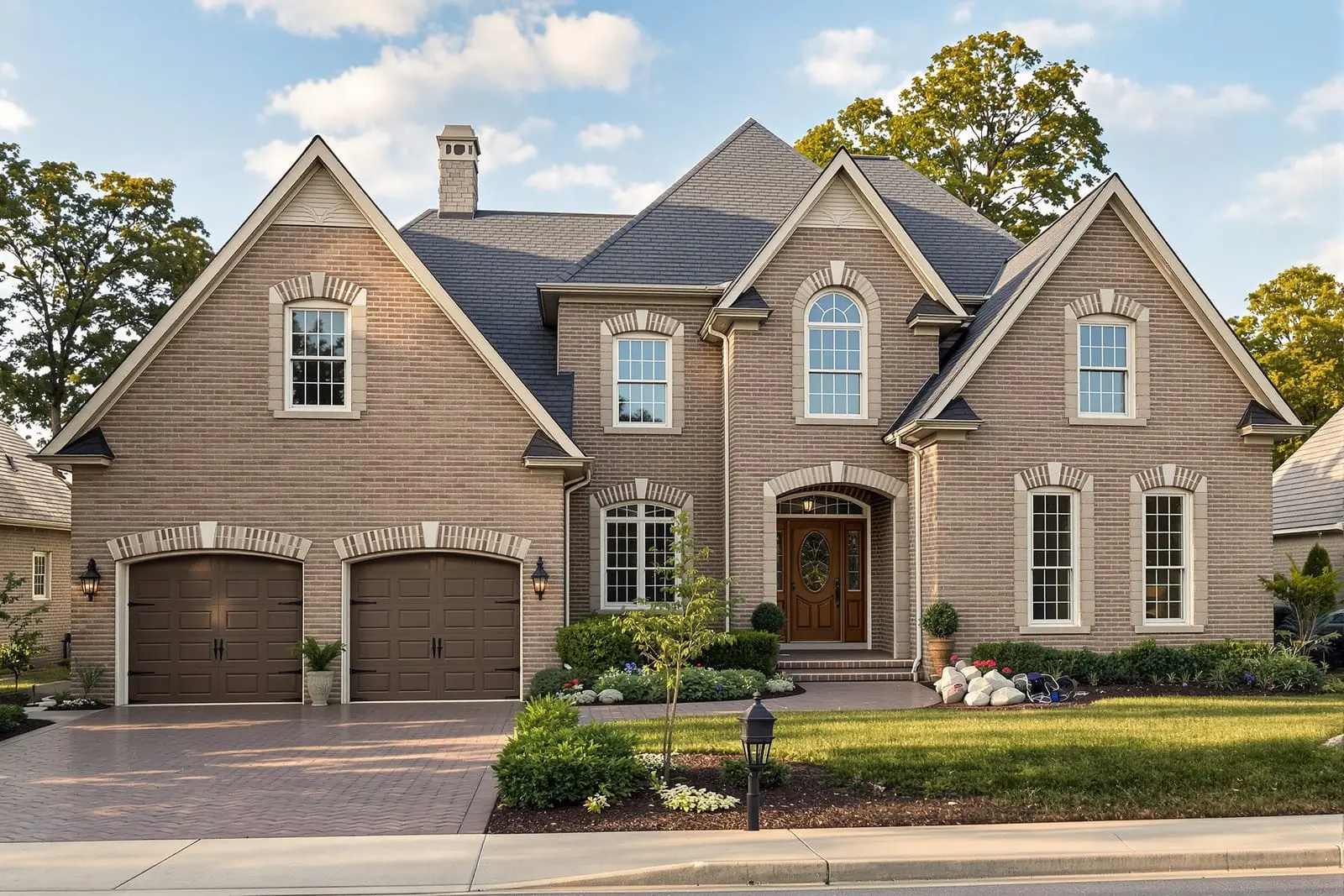
Our tuckpointing services in Pittsburgh, PA restore failing mortar joints and protect your brickwork from moisture damage. We carefully remove deteriorated mortar, match color and texture, and pack fresh mortar for a tight seal. Repointing extends the life of walls, chimneys, and facades while improving appearance.
Vanguard Masonry Pittsburgh provides professional tuckpointing throughout Pittsburgh, PA and the surrounding area. Our licensed, insured crew delivers safe, clean, on-time work with a free estimate before anything begins. Call (412) 784-6404 or request your free quote.
Tuckpointing & Repointing for Pittsburgh Brick Homes and Buildings
Brick walls in Pittsburgh see a lot of abuse from freeze-thaw cycles, road salt, and constant moisture. Over time, mortar joints crack, fall out, or turn powdery. That is when tuckpointing and repointing become necessary to keep water out and your structure stable.
Vanguard Masonry Pittsburgh focuses on masonry repair for our local climate, not just cosmetic touch ups. We inspect how deep the deterioration goes, how the wall was built, and what type of mortar was used originally. Then we match the repair method to the exact building, whether it is a century-old row house in Lawrenceville, a brick porch in Dormont, or a commercial façade downtown.
For most homeowners, the difference between tuckpointing and repointing is confusing. In practice, both involve removing bad mortar and installing new mortar in the joints. Repointing is the structural repair work, where failing mortar is taken out to proper depth and replaced. Tuckpointing can be purely cosmetic in some regions, but in Pittsburgh most people use the term for the full repair process. On this page, we explain how Vanguard Masonry Pittsburgh does both so you know exactly what you are paying for and why it matters in Western Pennsylvania weather.
How Vanguard Masonry Pittsburgh Performs Tuckpointing and Repointing
Good tuckpointing is slow, methodical work, not a quick smear of new mortar over the top. Our process is designed to protect the brick and keep water out for years, not months.
1. Joint inspection and mapping: We walk the entire wall, mark hollow or drummy joints, and probe soft areas with a masonry pick. We look for stepped cracking, bulging sections, and white staining (efflorescence) that shows movement or water entry. This tells us whether simple repointing is enough or if there is a deeper structural problem.
2. Mortar analysis and color match: We chip out a small mortar sample and compare it to different sand blends and binder ratios. On older Pittsburgh homes, mortar is often lime-rich and softer than modern mixes. Using mortar that is too hard can crack the brick during winter freezes. We mix test batches to match color, texture, and hardness before we start the main repair.
3. Cutting out damaged joints: We remove loose and cracked mortar to a minimum depth of 2 to 2.5 times the joint width, usually around 1/2 to 3/4 inch on older brick. For most work we use hand chisels and small grinders with dust control. We stay off the brick faces to avoid tool marks that can never be fully hidden.
4. Cleaning and dampening: After removal, joints are brushed and blown clean so no dust weakens the bond. Before packing new mortar, we lightly dampen the joints. This keeps dry brick from pulling water out of the fresh mortar too fast, which would lead to weak, crumbly joints.
5. Packing, compacting, and tooling: We press mortar firmly into the joint in thin lifts with pointing trowels, compacting fully so there are no voids. Joint profiles are then tooled to match the existing style, such as concave, flush, or slightly recessed. Proper tooling is a key water barrier, especially in wind-driven rain that is common off the rivers.
6. Final cleaning and curing protection: Once the mortar takes its initial set, we clean residue from the brick faces by hand. In hot sun or drying winds we mist the work lightly over the next day to prevent rapid drying and shrinkage cracking. In cooler weather we may use breathable coverings so the mortar can cure properly without freezing.
True Tuckpointing Detail Work: Color Bands and Historic Match
Although many Pittsburgh contractors use the word tuckpointing to describe any mortar repair, Vanguard Masonry Pittsburgh also offers true two-color tuckpoint work for customers who want a historic or high-finish look.
Traditional tuckpointing involves two contrasting mortars. First we fill the joint with a base mortar that matches the brick color closely. Once that sets, we cut a narrow groove and place a thin, often lighter-colored fillet line in the center of the joint. This creates the appearance of very fine, crisp joints and can dramatically sharpen the look of an older brick façade.
We use this technique selectively, usually on street-facing elevations of historic homes in neighborhoods like Shadyside, the North Side, or Squirrel Hill, where architectural detail matters. Because this process is slower, we walk customers through where it makes sense visually and where a standard repoint is more cost effective, such as on side or rear walls.
When performing tuckpointing on historic masonry, we avoid modern cement-heavy mixes that can trap moisture. Instead, we use lime-based or lime-modified mortars that remain compatible with older brick. The goal is not just to make the joints look sharp for listing photos, but to ensure the wall can continue to expand, contract, and shed moisture without damage.
What Drives Cost and Timeline for Tuckpointing in Pittsburgh
Pricing for tuckpointing and repointing in Pittsburgh is not one-size-fits-all. Vanguard Masonry Pittsburgh builds estimates around specific site conditions, not square-foot numbers pulled from a generic chart.
Key factors that affect cost:
• Access and height: Single-story porch walls with ground access cost less per square foot than a three-story gable end over a steep driveway. For taller work we may need scaffolding or lift equipment, and that adds to the project cost and time.
• Depth and extent of deterioration: If mortar is soft to the touch only at the surface, removal and replacement are straightforward. If joints are hollow 1 inch or deeper, or entire bricks are loose, we need more time to cut out, clean, and sometimes reset units.
• Brick condition and replacement needs: Spalled or cracked bricks from road salt, rising damp, or previous bad repairs must be swapped out. Sourcing suitable replacement brick, especially for older Pittsburgh homes, increases material and labor cost but is essential for a lasting repair.
• Mortar matching and special finishes: Basic structural repointing with a standard profile is less expensive than highly detailed color-matched or true tuckpoint work with contrast joints. Any custom color blending, sample panels, or historic detailing is priced accordingly.
• Season and weather protection: In colder months, especially late fall and early spring, we may need curing blankets or temporary enclosures with heaters to keep mortar above freezing. That adds labor and materials to the project. For budget-conscious customers, we often suggest scheduling major tuckpointing work between late April and early October, when Pittsburgh weather is more predictable.
We break these factors out clearly in our proposals so you know what you can adjust. For example, some homeowners choose to prioritize the worst or most visible elevations first, then schedule less critical walls for the following season.
Local Pittsburgh Considerations: Weather, Salt, and Old Brick
Western Pennsylvania weather is hard on masonry, and the way tuckpointing is done must reflect that. Vanguard Masonry Pittsburgh plans each project around local conditions so repairs last instead of failing in a couple of winters.
Freeze-thaw and water entry: Our region cycles above and below freezing frequently. Water that enters through hairline cracks expands as it freezes, widening gaps and popping faces off bricks. Proper repointing focuses on closing these entry paths and shaping joints in a way that sheds water, especially on sills, chimneys, and parapet walls that hold snow and ice.
De-icing salt: In Pittsburgh, salts from sidewalks, driveways, and roads can creep into lower brick courses. This leads to efflorescence and surface breakdown. When we see this pattern, we often recommend slightly more sacrificial mortar near the base (so the joint takes the abuse instead of the brick) and sometimes a breathable water repellent on particularly exposed areas.
Age of construction: Many city neighborhoods have pre-war brickwork that was never intended to see modern hard mortars. We test for this during our inspection. If a previous contractor has used very hard, cement-heavy mortar, we may have to selectively remove and replace it to relieve stress on the brick. Using the wrong mortar again will simply move cracks elsewhere.
Timing the work: For most Pittsburgh projects, the best window for tuckpointing is late spring through early fall. Winter work is possible with proper protection, but it is more expensive and limited by temperature and moisture. We are upfront about this. If a wall is stable enough to wait, we will say so. If there is active water infiltration that risks structural damage or interior mold, we explain what must be done immediately and what can be phased later.
What to Look For and How Vanguard Masonry Pittsburgh Handles Problems
Many homeowners notice problems with their mortar joints but are not sure when to call for help. As a rule of thumb, you likely need tuckpointing or repointing if you see: mortar that brushes out as sand when rubbed, visible gaps between brick and joint, step cracks running from window corners, or damp interior walls with no obvious plumbing issue.
When you contact Vanguard Masonry Pittsburgh, we start with a site visit, not a guess over the phone. We walk the property, point out specific problem areas, and explain in plain language what is happening and what your options are. If an issue is mainly cosmetic, we treat it that way. If we find bulging walls, loose chimney caps, or shifting foundations, we flag these as structural concerns that may need additional support work.
Common problems and how we address them:
• Previous smear jobs: If someone has simply spread new mortar over old failing joints (a common shortcut), we cut back to solid material, then repoint correctly. Surface smears trap water and always fail early in our climate.
• Mixed hard and soft joints: Sometimes only sections of a wall were repaired with a different mortar. This can cause uneven movement and new cracks. We selectively remove the incompatible material and replace it with a mortar that works with the whole wall system.
• Chronic leaks around chimneys: For chimneys, we often combine repointing with new crown work, re-flashing, or resealing storm collars. Tuckpointing the stack alone will not fix leaks if water is entering at the roof line.
We close every job with a walkthrough, showing you before and after conditions and explaining basic maintenance, such as watching for new cracks or staining. Our aim is that you understand what was done to your masonry and how long you can reasonably expect it to perform under Pittsburgh conditions.
“
Professional tuckpointing and repointing, done right the first time, quality materials, honest pricing, and results that last.
Vanguard Masonry Pittsburgh
Tuckpointing and Repointing Across Our Service Area