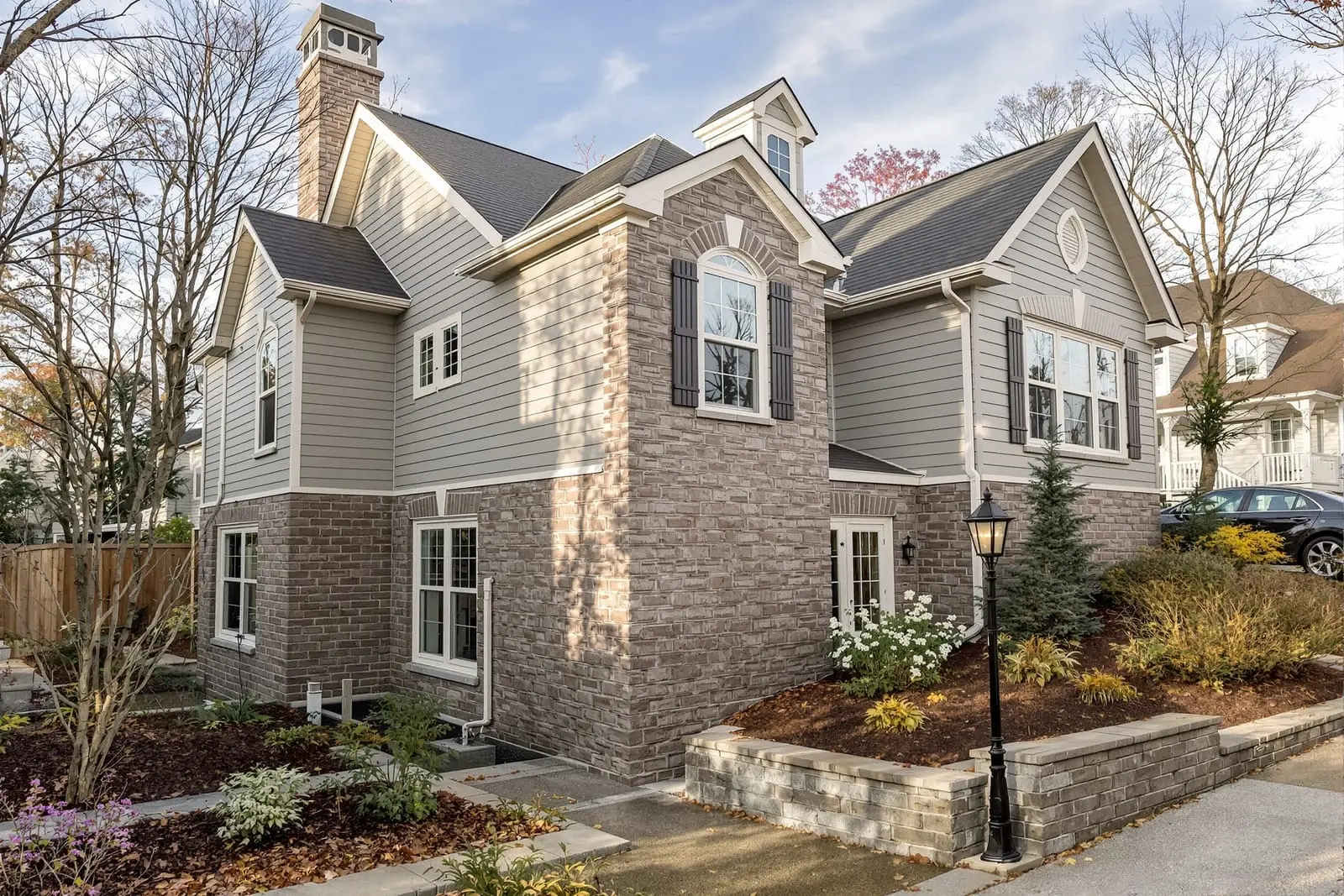
We provide foundation and basement masonry services in Pittsburgh, PA to support your home from the ground up. Our team builds new block and concrete walls and repairs cracks, bulges, or water intrusion in existing foundations. Proper masonry repair helps stabilize structures and protect finished basements.
Vanguard Masonry Pittsburgh provides professional foundation masonry repair throughout Pittsburgh, PA and the surrounding area. Our licensed, insured crew delivers safe, clean, on-time work with a free estimate before anything begins. Call (412) 784-6404 or request your free quote.
Foundation Masonry Repair in Pittsburgh’s Real Conditions
In Pittsburgh, foundations and basements take a beating from freeze-thaw cycles, hillside water runoff, and older clay tile or block construction. Vanguard Masonry Pittsburgh focuses on foundation masonry repair that is tailored to the way homes are actually built here, from brick and block basements in 1920s city houses to poured concrete foundations in newer suburbs.
A typical visit starts with a close inspection of the full foundation line, inside and outside if we can access it. We look for stepped cracks in block walls, bowing or bulging sections, crumbling mortar joints, damp or flaking interior paint, and signs of water entry like efflorescence (white mineral deposits) along the mortar. On the exterior we check grading, downspouts, and any exposed block, brick, or stone to see whether water is pushing against the wall. We also ask about past leaks, sump pump history, and any seasonal patterns you have noticed.
Once we understand what the masonry is doing, we match the repair to the actual cause. A straight vertical crack that has been stable for years is handled differently than a horizontal crack across the middle of a block wall that is bowing from soil pressure. Vanguard Masonry Pittsburgh will explain which issues are structural risks, which are moisture issues, and which are mostly cosmetic. This helps you decide what must be fixed now and what can be monitored or addressed later.
Because so many Pittsburgh neighborhoods were built on slopes, we pay special attention to rear and side walls that are cut into the hillside, such as in Mt. Washington, Brookline, and parts of Lawrenceville. These walls often experience higher lateral pressure, so any bulging, shearing at the bottom course, or separation at corners is a priority in our evaluations.
How We Repair Foundation Walls and Basement Masonry
Foundation masonry repair is not just filling a crack and walking away. On block or brick walls, we often start by grinding out loose or deteriorated mortar joints and repointing them with a mortar mix that matches the original in strength and composition. This is important in older Pittsburgh homes where softer brick or block can be damaged by modern mortars that are too hard.
For cracks that go through the block or brick, we clean the crack, cut a proper repair groove, and install a suitable repair material, often a high-strength cementitious repair mortar. On structural cracks we may stitch the wall with helical ties or rebar pins embedded in epoxy to lock separated sections together. If a wall is bowing, we may recommend steel reinforcement such as carbon fiber straps bonded to the interior face or steel I-beams anchored at the floor and joists, depending on how far the wall has moved and the condition of the masonry.
In basements with significant deterioration, such as spalling block faces or disintegrating mortar due to long-term moisture, Vanguard Masonry Pittsburgh may rebuild sections of the wall. This involves shoring the structure, carefully removing damaged units, and relaying new block or brick with proper bond patterns, reinforcement, and cores potentially filled with concrete where needed. We take care not to overload older footings and will let you know if additional footing work is required.
Where water is a factor, joint repair is combined with moisture management. This can include installing or tying into interior drain tile along the footing, patching honeycombed areas of poured concrete, and applying interior waterproofing coatings that are compatible with masonry. We avoid quick-fix patch products that trap moisture in the wall. Instead, we choose materials that allow the masonry to dry toward the interior or exterior, depending on your situation.
Basement Moisture, Efflorescence, and Water Entry Solutions
Many Pittsburgh homeowners call Vanguard Masonry Pittsburgh after they notice musty smells, peeling paint, or that white powder on basement walls. Efflorescence is not just a cosmetic issue, it is a sign that water is passing through the masonry and depositing minerals on the surface. If we only paint over it, it comes right back.
Our process starts by tracing the path of water. Outside, we look at how your yard drains, especially on hillside lots in places like Beechview, Greenfield, or Stanton Heights. We check whether your downspouts discharge too close to the foundation and whether sidewalks or driveways have settled toward the house. Inside, we look for patterns: water showing up at wall-floor joints, in specific corners, or through cold joints in poured walls.
Based on what we find, foundation masonry repair might include sealing active seepage points using hydraulic cement, then addressing the larger water source. Interior French drains, sump pits, and wall coatings are sometimes needed, but we explain the pros and cons of each option. For example, interior drains manage water after it reaches the wall, while exterior grading and downspout extensions reduce how much water ever hits the foundation.
We also help you understand what is normal and what is not. Slight dampness in an unconditioned 100-year-old Pittsburgh basement might be acceptable if you use it only for storage and the structure is sound. However, if you plan to finish your basement, the masonry and water issues must be properly corrected first or you risk mold behind new walls and damage to flooring. We coordinate our masonry repairs with any planned finishing work, so you do not pay twice for opening and closing walls.
Costs, Materials, and What Affects Your Foundation Masonry Budget
Foundation masonry repair costs vary widely, and the reasons matter. Vanguard Masonry Pittsburgh breaks down the work into parts so you can see what you are paying for and choose priorities if needed. Factors that influence cost include access to the wall (interior or exterior), how much of the wall is affected, whether structural reinforcement is needed, and whether water management work must be done along with the masonry.
For basic tuckpointing of accessible basement joints with no major structural issues, the cost per linear foot is lower, and the main drivers are preparation time and matching mortar and joint profile to your existing walls. When reinforcement solutions are necessary, such as carbon fiber straps or steel I-beams for a bowing wall, material and engineering requirements increase the price, but they also provide long-term protection.
Materials are chosen according to your foundation type. Older brick foundations in neighborhoods like Bloomfield or the North Side often need lime-rich mortars that remain flexible and breathable. Newer concrete block walls can use higher-strength cement-based mortars. We will not automatically use the strongest mortar on every job because a mortar that is too hard can make the masonry units themselves crack or spall over time.
If excavation is required to address exterior wall problems, costs will include digging, temporary support or protection for nearby structures like porches or sidewalks, and backfilling with suitable material and drainage components. In Pittsburgh, tight lot lines, shared driveways, and retaining walls along streets can impact how we access the work area. Vanguard Masonry Pittsburgh evaluates these logistics ahead of time so your estimate reflects real site conditions and there are fewer surprises during construction.
When to Call and What to Expect from Vanguard Masonry Pittsburgh
Some foundation masonry issues can be watched for a while, but others should be addressed quickly to avoid more expensive work later. Large horizontal cracks in the middle of a block wall, visible inward bowing, or new cracks that appear after a heavy rain or ground movement are signs to call sooner rather than later. Persistent water on the basement floor, even if it is only after storms, also deserves attention because it slowly breaks down mortar and encourages mold.
When you contact Vanguard Masonry Pittsburgh for foundation and basement masonry, we typically start with a site visit that lasts 30 to 90 minutes depending on the size and complexity of the property. We will walk with you, point out what we see, and discuss different repair levels, from minimal stabilization to full correction. You receive a written scope that explains the specific masonry work, materials, and any recommended drainage or reinforcement, not just a one-line description.
During the job, we protect your interior finishes and belongings as much as possible. In finished or partially finished basements, we may need to remove portions of drywall or paneling to safely access the masonry behind it. We explain this ahead of time and, where practical, coordinate with other trades if you are planning upgrades. For exterior work, we try to limit disturbance to landscaping and hardscapes, and we restore what we reasonably can once the masonry and drainage are complete.
After the work is done, we walk the project with you and show you what has been repaired or reinforced. We also explain any ongoing maintenance needs, such as keeping downspouts extended or avoiding heavy loads placed right next to a repaired wall. Our goal is that you understand your foundation, what was actually wrong, and how the repair will help it perform better in Pittsburgh’s challenging soil and weather conditions.
“
Professional foundation and basement masonry, done right the first time, quality materials, honest pricing, and results that last.
Vanguard Masonry Pittsburgh
Foundation and Basement Masonry Across Our Service Area